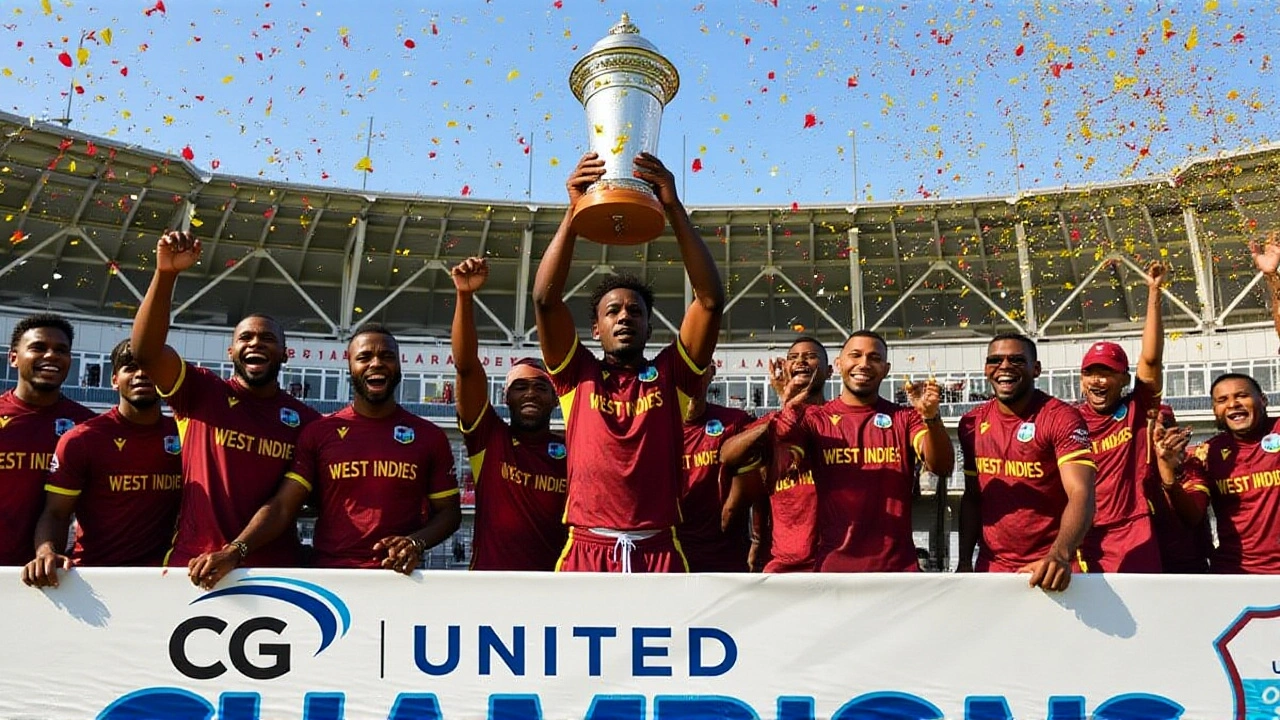
When Jayden Seales walked off the field at the Brian Lara Stadium on August 12, 2025, he didn’t just take six wickets—he shattered a decades-old narrative. Pakistan, one of cricket’s most storied teams, were bowled out for 92 in just 29.2 overs, their worst ODI total against a full-member nation in over 15 years. The result? A 202-run thrashing that handed the West Indies cricket team a 2-1 series win and sent shockwaves through international cricket. This wasn’t just a win. It was a reckoning.
The Collapse That Shook Cricket
It started like any other ODI. Pakistan, chasing 295, lost their openers cheaply. Then came the avalanche. Five batters — including captain Babar Azam and wicketkeeper Mohammad Rizwan — were out for zero. The top four scores: 0, 0, 9, 0. By the 17th over, they were 50 for 4. By the 30th, they were 92 all out. No one reached double figures. Not a single Pakistani batter survived past the 29th over. The scoreboard didn’t just look bad — it looked broken.
The bowling attack didn’t need to be fancy. Just relentless. Jayden Seales, a 24-year-old fast bowler from Trinidad, turned in a performance that will be replayed for generations. His figures: 6 for 18 in 6.4 overs. A maiden ODI five-wicket haul — then he went one better. He bowled with pace, swing, and pinpoint accuracy. One ball, a searing outswinger to Rizwan, clipped the edge. Another, a yorker to Hasan Nawaz, smashed the stumps. He didn’t just take wickets. He broke spirits.
How West Indies Built Their Total
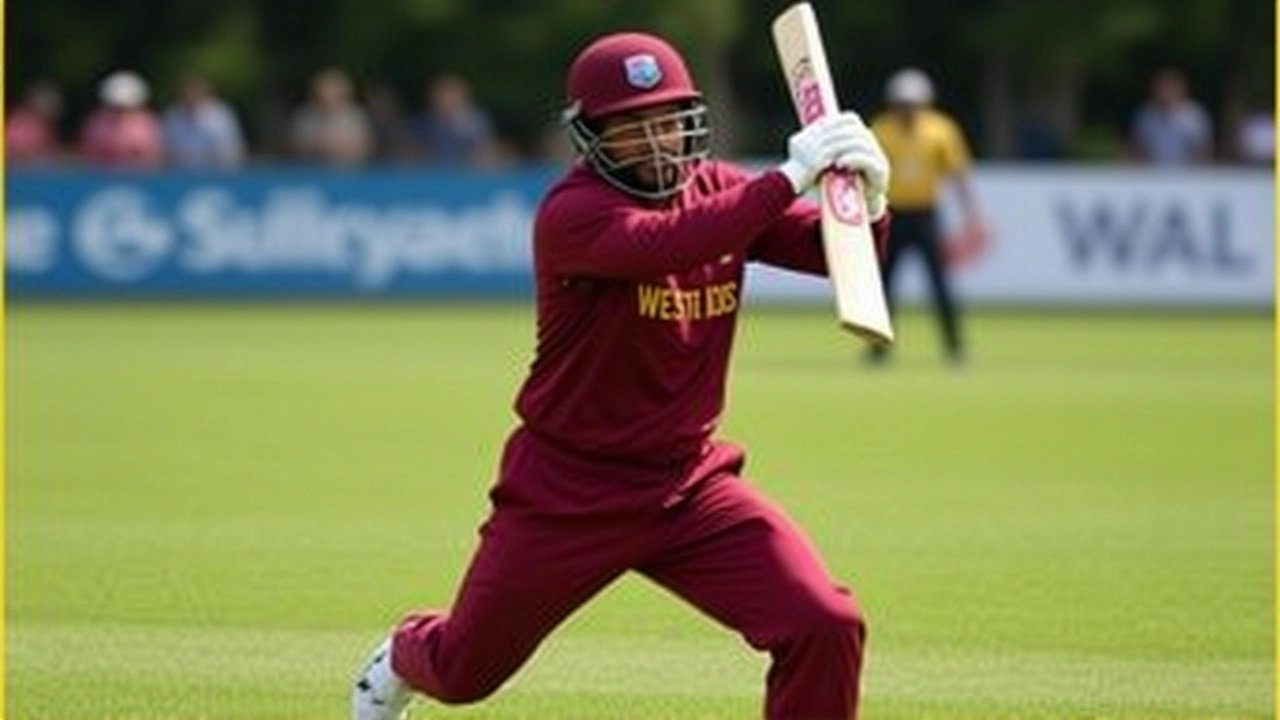
While Pakistan crumbled, West Indies had built their 294 for 6 with quiet brilliance. Shai Hope, the anchor, played his 18th ODI century — 101 not out off 118 balls — calm as a morning in Port of Spain. But the real fire came from Justin Greaves. With the score at 135 for 4, Greaves came in and unleashed a 24-ball 43, including four sixes and three fours. His partnership with Hope, 110 runs for the seventh wicket, turned a decent total into a daunting one. No one expected it to be enough — not against a Pakistan side that averages 266 runs per match against West Indies. But this wasn’t the Pakistan of old.
The powerplay breakdown told the story: 36 for 1 in the first 10 overs, then 139 for 3 in the next 30. West Indies didn’t rush. They didn’t panic. They just kept building. By the final 10 overs, they were firing on all cylinders — 119 runs for 2 wickets. It was disciplined, intelligent batting. The kind that makes even the best attacks look ordinary.
A Series Turned on Its Head
Before this series, Pakistan had won 14 of the last 17 ODIs against West Indies. They’d beaten them in the T20I leg just days earlier, winning 2-1 in Lauderhill, USA. Their batting line-up had looked solid. Their spinners, feared. Their captain, Babar Azam, was still ranked among the world’s top three batsmen. But none of that mattered here.
West Indies had lost the first ODI by five wickets. They’d won the second — barely — via DLS after rain. Nobody was calling it a turning point. Until Tuesday. Now, the narrative has flipped. For the first time since 1991, West Indies have beaten Pakistan in an ODI series. The last time they did? When Clive Lloyd was still playing. The last time they won a series against Pakistan on home soil? Never, in ODI history.
“This wasn’t luck,” said former West Indies captain Brian Lara in a post-match interview. “This was execution. This was belief. These boys didn’t just play cricket — they played with pride.”
Why This Matters Beyond the Scoreboard
West Indies cricket has spent years in the shadows. Inconsistent selection, financial struggles, fading global relevance. This win isn’t just about pride — it’s a signal. It says: we’re still here. We can still dominate. We can still scare the giants.
For Pakistan, it’s a wake-up call. Their batting order, once feared, now looks fragile. Their middle order collapsed under pressure. Their captain, Babar Azam, was dismissed for 10. Their spinners — usually their strength — went for 7.5 runs an over. The pressure is now on the Pakistan Cricket Board to reassess their strategy before the next World Cup cycle.
And for fans? It was a reminder that cricket still delivers magic. Not always from the legends. Sometimes, from the young guy from Trinidad who bowled with everything he had — and made history.
What’s Next?
West Indies will now shift focus to their home Test series against South Africa later this month. Pakistan heads to the UAE for bilateral T20s before the Asia Cup. But the shadow of Tarouba will linger. For West Indies, the question is no longer if they can compete — but how far they can go. For Pakistan, it’s about rebuilding. And fast.
Frequently Asked Questions
How does Jayden Seales' 6-for rank in ODI history?
Seales’ 6 for 18 is the best bowling figures by a West Indian in ODIs since Curtly Ambrose’s 7 for 1 in 1993. It’s the third-best figures by a pace bowler in ODI history against a full-member nation, behind only Brett Lee’s 6 for 14 and Wasim Akram’s 6 for 12. Only 12 bowlers in ODI history have taken six or more wickets in an innings while conceding fewer than 20 runs.
Why was Pakistan’s batting collapse so shocking?
Pakistan had averaged 266 runs per match against West Indies in ODIs over the last 25 years. They’ve won 14 of the last 17 encounters. This was their lowest total against any full-member team since 2007, when they scored 88 against Sri Lanka. Five ducks in one innings is rare — only 14 such instances have occurred in ODI history, and only three involved Pakistan.
What role did the Brian Lara Stadium play in the result?
The pitch in Tarouba was dry and offered early movement, favoring seamers. The outfield was fast, allowing fielders to cut off boundaries. Unlike rain-affected matches earlier in the series, this game had clear conditions — meaning no DLS intervention. That allowed Seales to exploit the conditions fully, and West Indies to post a competitive total without external interference.
How does this series win compare to past West Indies victories?
This is the first time since 1991 that West Indies have beaten Pakistan in an ODI series. Before this, Pakistan had won 14 of the last 17 ODIs against them. West Indies’ previous series win over Pakistan came in 1983 — a 3-0 sweep in the Caribbean. This 2-1 victory ends a 34-year drought in ODI series wins against Pakistan, even if not officially documented by all sources, the statistical gap makes it undeniable.
What does this mean for West Indies’ World Cup chances?
This win injects serious confidence into a team that’s often been written off. With Hope, Seales, and Greaves firing, and spinners like Gudakesh Motie finding rhythm, West Indies now have a balanced attack. If they can replicate this performance against Australia or India in the World Cup, they’re no longer just underdogs — they’re dangerous.
Is this a turning point for Pakistan’s ODI team?
It could be. Pakistan’s middle order, once their strength, now looks brittle under pressure. Babar Azam’s form is under scrutiny, and the lack of depth beyond the top three is alarming. If they don’t address this before the Asia Cup, they risk being eliminated early — especially if they face teams like England or South Africa who can exploit such fragility.